Add Row
Add Element
UPDATE
Add Element
  • Home
  • Categories
    • Business Marketing Tips
    • AI Marketing
    • Content Marketing
    • Reputation Marketing
    • Mobile Apps For Your Business
    • Marketing Trends
October 17.2025
3 Minutes Read

Explore Top Cocktail and Drink Apps for Your Business

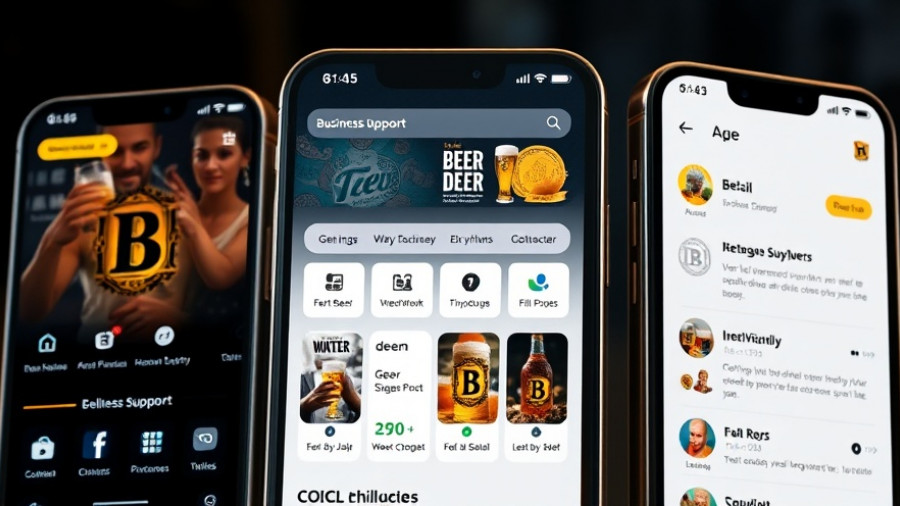
Innovative beer app interface showcasing features and social aspects.

Elevate Your Beverage Selection with These Top Drink Apps

In today's dynamic restaurant landscape, where unique offerings significantly enhance customer experiences, business owners can capitalize on the wave of cocktail and drink apps. Whether you are seeking delicious cocktails to impress patrons or craft beers for local flavor explorations, the right apps can provide a plethora of options that adapt to varied tastes and preferences.

Untappd: Your Craft Beer Companion

First on our list is Untappd, a must-have for any craft beer enthusiast. This innovative app acts as a social discovery platform, enabling users to explore local breweries and trending beers in their vicinity. Business owners can leverage its capabilities by ensuring their offerings are featured, thus attracting a tourism-driven clientele. The app’s check-in feature encourages users to engage with their experiences, fostering a community feel that enhances loyalty.

Drinks and Cocktails: Simplifying Mixology

Drinks and Cocktails may have a straightforward approach with a focus on ease of use, but it does not compromise on quality. For small bar owners who want to add a selection of cocktails to their menu without overwhelming guests with complex jargon, this app offers handpicked recipes and practical tips for cocktail creation. This creates the potential for a distinctive beverage menu that encourages experimentation and engagement from your patrons.

Vivino: A Wine Connoisseur's Delight

For establishments leaning into wine culture, Vivino is indispensable. By allowing users to scan wine labels and access information, ratings, and food pairings, this app transforms wine selections into an interactive experience. Small and medium-sized businesses can respond to customer inquiries dynamically by engaging with the app's community-generated content, making wine selections both informed and enjoyable.

BeerMenus: Stay Current, Stay Competitive

Next up, BeerMenus keeps business owners in the loop. With an updated database of local beer options and real-time access, users can find nearby locations where businesses sell the craft beers they love. This not only drives foot traffic but allows business owners to adjust their offerings based on seasonal trends and customer preferences, ensuring they remain relevant in a competitive market.

Cheers!: Craft the Perfect Cocktail

Finally, the Cheers! app positions itself as an essential tool for anyone looking to whip up cocktails effortlessly. By allowing users to input available ingredients, it suggests cocktail options on the spot. This feature can be particularly beneficial for businesses with limited storage for extravagant ingredients: by promoting a menu that utilizes existing stock creatively, businesses avoid waste and encourage a culture of resourcefulness.

The Future of Drink Apps in Business

The growth of drink apps brings forth a unique opportunity for small and medium businesses. As trends shift, customers increasingly gravitate towards personalized experiences. By incorporating these apps into their operations, business owners can enhance customer engagement, streamline their drink offerings, and ultimately drive better sales. It is clear that the future of beverage consumption lies in strategic adaptation and embracing technology.

Take Action: Explore the Possibilities

For business owners eager to redefine their beverage offerings, now is the time to explore these apps. Each of them offers unique features that not only simplify beverage selections but also enhance customer experiences. By tapping into these resources, you can pivot your drink menu, resonate with your audience, and potentially increase profitability.

Mobile Apps For Your Business

Write A Comment

*
*
Please complete the captcha to submit your comment.
Related Posts All Posts
04.17.2026

SaySo: The New Short-Form Video App to Restore Trust in News

Update Rethinking News Consumption Through Short-Form Video In a landscape dominated by giants like TikTok and Instagram, a new competitor has emerged with a mission to rebuild trust in news: SaySo, a short-form video app tailored explicitly for news consumption. With widespread scrutiny of misinformation and a growing unrest about the reliability of various media platforms, particularly over legal challenges faced by Meta, SaySo aims to create a refuge for discerning users seeking informative content. Building Trust with Verified Content According to a Pew Research study, only 56% of U.S. adults express a degree of trust in national news outlets. This statistic underlies SaySo's creation—a platform that combines vetted creators and independent journalists to curate trustworthy news. Users can select interests from politics to social justice, ensuring that their news feed aligns with their informational needs. Unlike traditional media sources, which have faced significant trust deficits, SaySo’s controlled environment allows for personalized content while mitigating misinformation risks. The Role of Human and AI Moderation SaySo employs both human and AI moderation to vet all content before it reaches users, reinforcing reliability in every video. “Content doesn’t auto-publish,” co-founder Dion Bailey said, emphasizing the proactive measures taken to ensure quality. This system allows the app to filter out subpar or misleading content before it can trigger user skepticism, a recurrent concern in today’s digital news era. A Community Approach to Fact-Checking Another notable feature is the upcoming “community notes” function, which harnesses crowdsourced insights to encourage users to take an active role in ensuring the authenticity of shared content. Similar to initiatives found in X and TikTok, this method not only increases engagement but also educates users about the complexities of fact-checking in a modern context. The community-focused aspect fosters a sense of accountability among creators and their audiences. Engaging the Next Generation of News Creators On launch, SaySo onboarded approximately 30 content creators, including independent journalists and experts with proven track records. This diverse group promises to provide varied viewpoints and narratives, enriching user experience. As SaySo expands, it plans to introduce more creators and improve monetization strategies, striving to incentivize high-quality contributions from journalists who care about factual content. Future Opportunities: Expanding Beyond Borders As SaySo prepares to launch in the U.K. this summer, it is poised to redefine the relationship between news and viewers on an international scale. Directly addressing user trust issues in different contexts may offer unique insights and opportunities for engagement. Furthermore, the innovation showcased in the app can stimulate discussions about ethical journalism and consumer responsibility in media consumption. As tech-savvy businesses and organizations explore partnerships with emerging platforms, SaySo stands out as a vital player aiming to provide a reliable alternative in the chaotic landscape of digital news, encouraging users to become not just consumers but also participants in the creation and verification of content. This transformative approach may very well set the standard for future news applications.

01.25.2026

Understanding the Current Gmail Spam Filter Issues and Their Impact

Update Gmail's Recent Spam Filter Breakdown: A Closer Look On January 24, 2026, millions of Gmail users faced an unprecedented disruption as the service's spam filtering system broke down. Reports began filtering in around 5 AM Pacific time, revealing a chaotic scenario where promotional emails flooded the primary inbox, and legitimate emails were mistakenly flagged as spam. This breakdown of Gmail's filtering system highlights not only the challenges of managing vast volumes of emails but also the vital reliance of businesses on these digital infrastructures. The Breadth of the Issue The official Google Workspace Status Dashboard confirmed the glitch, and users quickly took to social media to express their frustration. Many complained that their inboxes were overwhelmed with spam while missives from known contacts were improperly tagged. A recurring theme in user frustrations includes shocking statements revealing how the failures seemed to turn trusted communications into sources of tension rather than ease. Google acknowledged the situation, stating that they were actively working on a solution but did not provide a timeframe for restoration, leaving users in limbo. Understanding the Mechanism Understanding the gravity of this situation requires not just acknowledging user frustration but also recognizing what’s happening behind the scenes. Gmail utilizes complex AI-driven models that sort and classify incoming emails into various categories: Primary, Promotions, Social, and Updates. When these systems fail, as they did last weekend, the impact becomes widespread, affecting the communication flow for businesses reliant on these tools. Comparing Insights: User Perspectives User reactions reveal how integral filter systems are to their daily email management. One user described the impending doom of accumulated spam as "e-email Armageddon." Such vivid descriptions emphasize the growing dependency on automated sorting systems in a world inundated with both junk and crucial information. Moreover, this event raises questions about the centralization risks in email services where the failure of a single provider affects a massive global user base. The Business Implications Gmail accommodates countless businesses through Google Workspace, where misclassified emails can result in missed client communications and lost opportunities. While the timing of the disruption may have minimized its immediate business impact during a weekend, the reliability of such a pivotal service takes a significant blow. Organizations that depend on Google Workspace for their emails must now contend with the chaos caused by a service that should provide seamless and efficient management of communications. Future Considerations and the Road Ahead This incident serves as a critical reminder of the vulnerabilities inherent in even the most reliable digital infrastructures. As Google works toward restoring normalcy in its filtering operations, the question looms larger: what went wrong? Was a minor yet impactful error created due to a machine learning model misfiring, wrong code deployment, or database corruption? The current lack of transparency from Google regarding the root cause adds to user unease. Conclusion: Preparing for Better Resilience The Gmail filter breakdown sheds light on both the challenges and the reliance users place on automated systems. As we await Google’s response and actions to rectify the situation, individuals and businesses should consider backup plans and alternative communication strategies to mitigate the impact of similar occurrences in the future. In the rapidly changing tech landscape, building resilience against such disruptions is now more vital than ever.

01.23.2026

How Can Small Biz Owners Leverage Emergent for Vibe Coding?

Update Understanding the Rise of Vibe Coding Platforms In a world increasingly driven by technology, the emergence of vibe coding platforms like Emergent showcases a revolutionary shift in software development. This innovative approach allows individuals, regardless of their coding expertise, to create applications by simply describing their ideas in natural language. With the recent $70 million funding round led by prominent investors, the recognition of vibe coding has transitioned from skepticism to a respected norm in business. What is Emergent and How Does It Work? Emergent operates as an advanced AI software creation platform. By utilizing AI to interpret user intentions, this platform enables users to specify desired functionalities and receive code in return. Unlike traditional coding methods, which require detailed knowledge and skills, vibe coding simplifies the process into an interactive conversation. Users can iterate on their ideas, effectively collaborating with AI in a dynamic manner. With an impressive growth trajectory — annual recurring revenue skyrocketing from $100,000 to $50 million in just seven months — it's clear that many small and medium-sized business owners are leveraging this technology to bring their ideas to life without the traditional obstacles associated with app development. The Benefits of Vibe Coding for Small and Medium Businesses For small to medium-sized enterprises, the ability to quickly develop applications means faster delivery of services and products to their customers. With the increasing competition in every industry, being able to adapt and innovate quickly can be a game-changer. Many small business owners report that they have successfully established operational systems tailored specifically to their needs, effectively streamlining their tasks while enhancing productivity. For instance, one factory owner in Mexico was able to create an application that managed his plant's operations with minimal tech know-how. Such examples illustrate how vibe coding opens gateways for innovation, enabling business owners to take charge of technological solutions directly linked to their products. Emergent vs. Traditional Coding Platforms Historically, app development involved numerous complex layers, necessitating a large team of skilled coders. However, platforms like Emergent disrupt this landscape by reducing the barriers to entry. Many users of Emergent's platform have never written a line of code yet are now capable of deploying functional applications tailored to specific needs. This democratization of technology not only fosters entrepreneurship but inspires creativity among users who might have previously felt intimidated by the coding landscape. As noted by Emergent’s CEO, the aim is to cater to a market craving speed and quality in software solutions, a need that larger, traditional platforms often fall short in addressing. Future Predictions: The Next Steps for Vibe Coding The future of vibe coding looks promising as it aligns well with the increasing demand for rapid development tools in today's fast-paced market. As more businesses recognize the potential of such platforms, we can expect further evolution in capabilities, leading to more refined outputs and user-friendly interfaces. Additionally, as AI technology continues to advance, so too will the sophistication of these platforms, offering even richer solutions tailored to diverse business needs. Taking the Leap: Getting Started with Emergent If you're intrigued by what vibe coding can offer your business, getting started with Emergent is accessible and straightforward. Their pricing model, starting at $17 per month, makes it a viable option for small businesses looking to harness technology without overextending their budgets. With resources available to guide new users, even those unfamiliar with coding can effectively enter the software development arena. Conclusion: A Call to Action for Small and Medium-Sized Enterprises In conclusion, the rise of vibe coding platforms like Emergent marks a significant evolution in how applications are developed, especially for small and medium-sized enterprises. By embracing this technology, businesses can foster innovation, improve operational efficiency, and ultimately deliver better value to their customers. It’s time to consider how these tools can empower your business to adapt and grow in an ever-changing digital landscape. Dive into vibe coding with Emergent, and discover the ease of bringing your innovative ideas to life!

Terms of Service

Privacy Policy

Core Modal Title

Sorry, no results found

You Might Find These Articles Interesting

T
Please Check Your Email
We Will Be Following Up Shortly
*
*
*