Add Row
Add Element
UPDATE
Add Element
  • Home
  • Categories
    • Business Marketing Tips
    • AI Marketing
    • Content Marketing
    • Reputation Marketing
    • Mobile Apps For Your Business
    • Marketing Trends
August 22.2025
3 Minutes Read

Transform Your Business Efficiency with ComputerRL: The Future of AI Automation

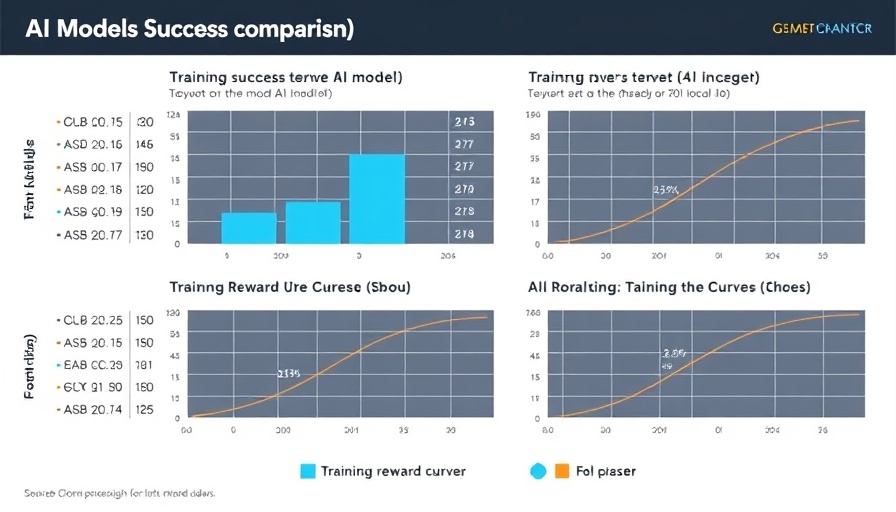
AI framework scaling end-to-end reinforcement learning performance graphs

Unlocking New Possibilities with ComputerRL

The landscape of artificial intelligence (AI) is transforming daily, especially for small and medium-sized businesses looking for innovative solutions to enhance productivity. The recent unveiling of Zhipu AI's ComputerRL offers a glimpse into the future of automated digital workspaces. This cutting-edge framework aims to address a critical challenge: improving the interaction between computer agents and human-designed graphical user interfaces (GUIs). With this advancement, businesses can expect quicker and more effective workflows.

The API-GUI Paradigm: A Game Changer

One of the standout features of ComputerRL is its API-GUI paradigm. Generally, traditional AI agents face difficulties when accessing environments that are optimized for human use; they struggle to perform actions that would be instinctual for a person, like clicking or scrolling. By integrating the precision of programmatic API calls with the versatility of GUI actions, ComputerRL enhances this interaction.

This hybrid approach bridges the gap between complex digital tasks and user-friendly interfaces. Businesses can now leverage machine-friendly APIs for routine tasks and still have the flexibility to utilize GUI actions when needed. For example, tasks like image processing in applications such as GIMP can be completed seamlessly using this integration, which allows for more streamlined operations.

Scalability and Efficiency for Growing Businesses

Resource management is a significant concern for many small and medium-sized enterprises as they scale. The infrastructure supporting ComputerRL is developed on Docker and gRPC, enabling high-capacity parallel processing across thousands of virtual Ubuntu machines. This capability ensures that RL training becomes efficient, tackling hurdles like resource drain and latency that can plague smaller setups.

Key features of the infrastructure include lightweight virtual machine deployments, multi-node clustering, and a user-friendly web interface for monitoring, making it easier for businesses to implement sophisticated training systems without needing extensive technical expertise. As businesses grow, they can rely on this scalable model to support their evolving needs.

Enhancing Reinforcement Learning with Innovation

Moreover, Zhipu AI has presented a novel approach to reinforcement learning (RL) with its component called Entropulse. This feature enhances the training process by implementing alternating training phases, thus improving agent performance and reducing stagnation. For businesses, this means that AI can learn and adapt faster, providing solutions that are effective and adaptable to changing business needs.

The quick adaptability and efficiency of ComputerRL can also inspire confidence in those hesitant about adopting AI technologies. The platform empowers teams to maximize their productivity through automation while minimizing the risks associated with ineffective AI deployment.

Why This Matters for Your Business

For small and medium-sized businesses, the introduction of ComputerRL is more than just technical jargon; it's an invitation to reimagine operational workflows and improve overall efficiency. As AI continues to evolve, integrating innovative frameworks like ComputerRL can significantly impact how business tasks are executed—from everyday document formatting to complex data analysis.

Being early adopters of such technologies places these businesses at a competitive advantage. Not only can they automate more functions, but they also enhance their workflows, leading to higher productivity and profitability.

Take Action: Embrace AI for Your Business

As we navigate through an era driven by technology, equipping your business with tools like ComputerRL can redefine your approach to efficiency. Why not explore how adopting such innovations could accelerate your tasks, improve service delivery, and ultimately result in better customer satisfaction? By staying ahead, you'll not only cope with the change but also thrive in it.

AI Marketing

Write A Comment

*
*
Please complete the captcha to submit your comment.
Related Posts All Posts
04.19.2026

How OpenAI's Acquisitions Reflect Existential Questions in AI Ventures

Update OpenAI's Strategic Acquisitions: Addressing Existential QuestionsRecently, OpenAI has been making headlines, not just for its groundbreaking innovations but also for its evolving strategic direction. In the latest episode of TechCrunch’s Equity podcast, discussions centered around two of OpenAI's notable acquisitions: the personal finance startup Hiro and the media company TBPN. These moves highlight OpenAI's pressing desire to address key concerns about its future, reflecting both challenges and opportunities in an industry that's constantly changing.The Hirings: Are They Redefining AI's Boundaries?The acquisition of Hiro seems less about expanding product lines and more about absorbing talent. Founded just two years ago, Hiro was a budding player in personal finance technology but didn’t secure long-term sustainability. Observers speculate that OpenAI's interest lies in leveraging the expertise of Hiro's team rather than maintaining its brand or existing products. This trend towards 'acqui-hiring' speaks to a pressing question in the tech world: how can companies better adapt and innovate in the fast-paced market of AI?Building Public Trust: The TBPN AcquisitionThe deal with TBPN marks a strategic shift for OpenAI, as it explores avenues to reshape its public image amid scrutiny. With reports of the company being underwhelming in its outreach, running a tech talk show might seem superfluous to some. However, maintaining the editorial independence of TBPN is critical, as it could infuse transparency and trust into OpenAI's narrative at a time when skepticism towards AI technologies is high. Engaging with the public in a more informal and direct manner, through talk shows and everyday conversations about technology, might just provide the necessary bridge to better stakeholder relationships.Navigating Competitive LandscapesAs OpenAI strives to remain competitive against rivals such as Anthropic, these acquisitions hint at a robust strategy focused on diversification and talent acquisition. By tapping into new sectors, OpenAI is not merely looking for fresh products, but rather preparing to tackle larger, existential challenges—competition, market viability, and public perception. The ability to engage more comprehensively with business clients and personalize AI applications will be vital.Conclusion: The Road Ahead for OpenAIOpenAI’s recent activities prompt critical reflection on the future trajectory of AI. Will talent absorption through acquisitions place OpenAI a step ahead of its competitors? Can enhanced public engagement help navigate scrutiny and facilitate a broader acceptance of AI solutions? As these strategic plays unfold, businesses must stay informed and adaptable to leverage new developments in the tech landscape efficiently.For those interested in the intersection of AI, business, and public discourse, keeping up with OpenAI’s efforts will be vital. As the dialogue around technology continues to evolve, so does the imperative for transparency and engagement. The next steps for OpenAI may redefine our understanding of AI's role in society.

04.19.2026

Unlock the Power of Gemma 4 Tool Calling to Build AI Agents

Update Unlocking AI Potential: How Gemma 4 Revolutionizes Tool Calling Imagine a scenario where you can ask your AI model about the weather in Tokyo, and instead of receiving a mere estimate, it fetches the actual weather data live. This is the promise of Gemma 4, a groundbreaking framework from Google. With its built-in function calling capabilities, Gemma 4 equips small and medium-sized businesses to create AI agents that have real-time access to APIs, all without the need for cloud dependency. Understanding Tool Calling in LLMs This new technology addresses one of the significant limitations of conversational language models, which typically can only provide answers based on their training data, often generating outdated or incorrect information. By implementing tool calling, Gemma 4 enables AI models to: Recognize when outside information is needed Select the right function based on available API calls Format method calls correctly to retrieve accurate data In simple terms, the AI acts like a brain that decides what information to call upon when needed, while the external functions perform the necessary actions—think of it as a team effort between the AI and the tools. The Architecture of Gemma 4 Tool Calling Before diving into coding, it is essential to understand the underlying architecture of Gemma 4’s tool calling. The process consists of several key steps: Define the actual tasks you wish to perform, such as fetching weather data or currency conversion, using Python functions. Create a JSON schema for these functions, detailing their names, purposes, and parameters. Execute these functions via API calls to bring your AI agent to life. This structured approach enables businesses to create reliable AI agents that can operate autonomously without constant human intervention. Hands-On Tasks to Start Building To foster a practical understanding, here are three immediate tasks you can try to get hands-on experience: Live Weather Lookup: Create a function that fetches the current weather for any city you input. Live Currency Converter: Design a tool to convert currencies based on real-time exchange rates. Multi-Tool Agent: Combine both functions to create an agent capable of fetching weather and currency data simultaneously. Engaging in these tasks will help you appreciate how Gemma 4 balances simplicity in access with the sophistication of tools like APIs that make it all possible. Why Gemma 4 Stands Out in AI Development Unlike many existing frameworks that rely on third-party APIs, Gemma 4 uses structured function calling through a unique set of special tokens. This ensures that your AI agents remain operational despite variabilities in licensing or service updates. It empowers businesses to retain full control over their AI technologies, providing a major advantage in today’s fast-paced tech environment. Future Predictions for AI Tool Usage As businesses increasingly adopt AI technologies, the trend towards enhancing AI agents with robust real-world capabilities will only grow. Custom AI agents powered by frameworks like Gemma 4 are likely to become the norm, enabling not just basic queries but complex workflows that can reason, plan, and execute tasks autonomously. To remain competitive, small and medium-sized businesses must engage with such innovations, ensuring they are not only using AI but harnessing its full potential to improve operational efficiencies. Join the Revolution: Step Towards Building Your Own AI Agent If you are interested in exploring how generative AI can transform your business processes, now is the time to take action. Start learning about Gemma 4's capabilities and begin planning your very own AI agent. The digital landscape is evolving rapidly, and those who adapt to these advancements will lead the way in their respective industries. Your journey towards AI mastery awaits—take the first step today!

04.19.2026

Unlocking Claude Code: Structure AI Projects Like an Engineer to Innovate

Update Why an Organized Structure Matters for Claude Code Projects In today's fast-paced tech environment, particularly for small and medium-sized businesses, mastering AI tools like Claude Code becomes essential. But what many developers overlook is that simply using an LLM isn’t enough. What truly elevates an AI project is a robust, organized structure. A well-structured codebase not only enhances output quality but also streamlines the development process, making it easier for businesses to adapt and innovate. Understanding the Claude Code Framework: Key Components Creating a Claude Code project requires a thorough understanding of four essential components. Each of these layers plays a critical role in ensuring that the AI behaves intelligently and responsively. Let’s break them down: The Why: This outlines the purpose of each functionality, acting as a guide to help developers understand their objective. The Map: Knowing where everything is located offers clarity to developers as they navigate their project. The Rules: Establishing guardrails ensures the AI operates within defined parameters, preventing issues that might arise from more generalized commands. The Skills: Thoughtfully designed modes let the AI exhibit expert behavior in various tasks, enhancing its utility for small businesses. Blueprinting Your AI Incident Response System Let’s take a closer look at a practical application: an AI-powered incident management system named Respondly. By organizing your repository effectively, small and medium businesses can leverage AI to improve incident management. Respondly will incorporate features like alert ingestion, severity classification, runbook generation, and resolution tracking. The focus here isn’t just on the AI system but also on how a coherent repository design offers a better experience with Claude Code. A well-planned directory structure makes each aspect more transparent, aiding developers in crafting effective AI solutions. Implementing Claude Code: Practical Steps for Developers Before jumping into coding, it’s vital to plan out the directory structure. Begin by creating a clear layout that adheres to Claude Code's foundational principles. Organizing files under clearly defined categories helps maintain project cohesion and encourages collaboration among team members. Here’s a general structure you might follow: CLAUDE.md: Acts as the project overview, detailing objectives and essential information. .claude/skills: Here, reusable expert modes are stored. .claude/rules: Guardrails that outline restrictions and guidelines for AI behavior. .claude/Docs: Centralizes documentation for easy reference. This organization will facilitate better interaction with the Claude Code system and generate a more reliable output. Closing Thoughts: The Future of AI Development The rapidly evolving landscape of AI presents both challenges and opportunities for businesses. Ensuring your Claude Code project operates like an engineer by establishing a thoughtful structure can significantly impact your organization’s innovative potential. The road ahead will undoubtedly see increased integration of AI in various business processes, which underscores the importance of getting it right from the beginning. As small and medium-sized businesses look to harness the power of AI, understanding the intricacies of project organization is paramount. By taking a proactive approach to structuring projects like Claude Code, businesses will not only enhance their capabilities but will also position themselves favorably in the marketplace. Will your business step up to the plate and innovate with Claude Code? Start planning your project framework today to unlock the full potential of AI!

Terms of Service

Privacy Policy

Core Modal Title

Sorry, no results found

You Might Find These Articles Interesting

T
Please Check Your Email
We Will Be Following Up Shortly
*
*
*